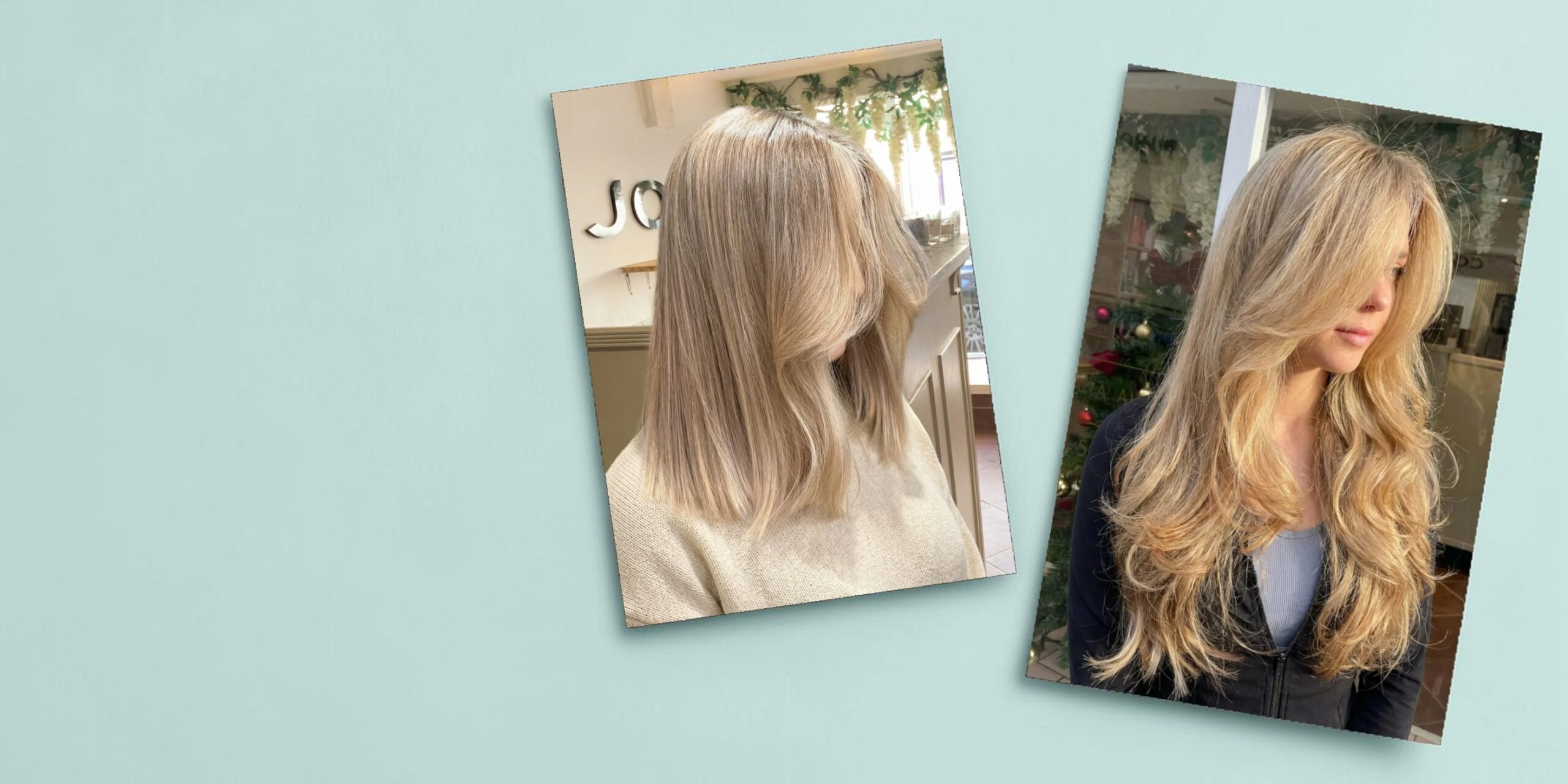
How Do I Make My Hair Go Really Light?
Going lighter is always tempting — a platinum blonde, a clean ice silver. But it’s also one of the hardest colour results to achieve well. Many stylists would find that level of lift genuinely difficult, which is why it’s usually left to colourists with real expertise. Lightening hair takes careful planning and patience, especially if you want to avoid patchy colour, dry ends and unwanted brassiness.
This guide walks through whether you should attempt it yourself or use a stylist, what to watch out for, and where clients most often go wrong.
If you’d rather build up lightness gradually, our highlights service is one route. And understanding how bleach works is genuinely worth doing before any big lightening decision. If you’d like to talk it through, get in touch or call us on 01235 534705.
Getting Your Hair Really Light: What to Know
Should I lighten my hair myself?
The honest answer: significant lightening is the single riskiest thing to attempt at home. Box bleach can’t assess your hair’s condition, your starting colour or how it will react — and getting it wrong doesn’t just mean a poor result, it can mean real damage, breakage, or hair too compromised to fix easily. Our post on bleaching box-dyed hair shows how quickly this gets complicated. For dramatic lightness — platinum, white, silver — a professional is strongly advised. It isn’t gatekeeping; it’s the difference between a clean result and a salon-correction job.
Why is going very light so difficult?
Colour can’t lift colour — the hair has to be lightened with bleach, which removes its natural pigment. As it lifts, hair passes through red, orange and yellow stages before reaching the pale base needed for platinum or silver. Reaching that base cleanly, without over-processing, is the skilled part. How far your hair can safely go depends on your starting colour, its condition, and whether it’s been coloured before. Our post on whether bleach is a colour explains the science simply.
Where do clients most often go wrong?
The most common mistakes: expecting it all in one sitting (darker or previously coloured hair often can’t lift that far safely in a single appointment); underestimating the upkeep (regrowth and re-toning are ongoing); and ignoring condition (pushing already-stressed hair too far). Brassiness is also misunderstood — the pale base isn’t the finished look; a toner is applied afterwards to neutralise warmth and create the final shade. Our post on brassy hair covers that side.
What should I be concerned about?
Two things, honestly: your hair’s health, and your expectations. Heavy lightening is demanding on hair, so condition has to be the priority — a good colourist will sometimes say “not in one go,” and that’s the right call. And the result depends entirely on your starting point; the same platinum isn’t equally achievable for everyone. Our guide to managing your colour expectations is essential reading. If you want the full picture on the most dramatic routes, see going white blonde and our guide to a scalp bleach.
Going really light can look stunning — but it’s a process, not a quick fix. The best first step is an honest consultation: book in and we’ll assess your hair and plan the safest route to the shade you want.