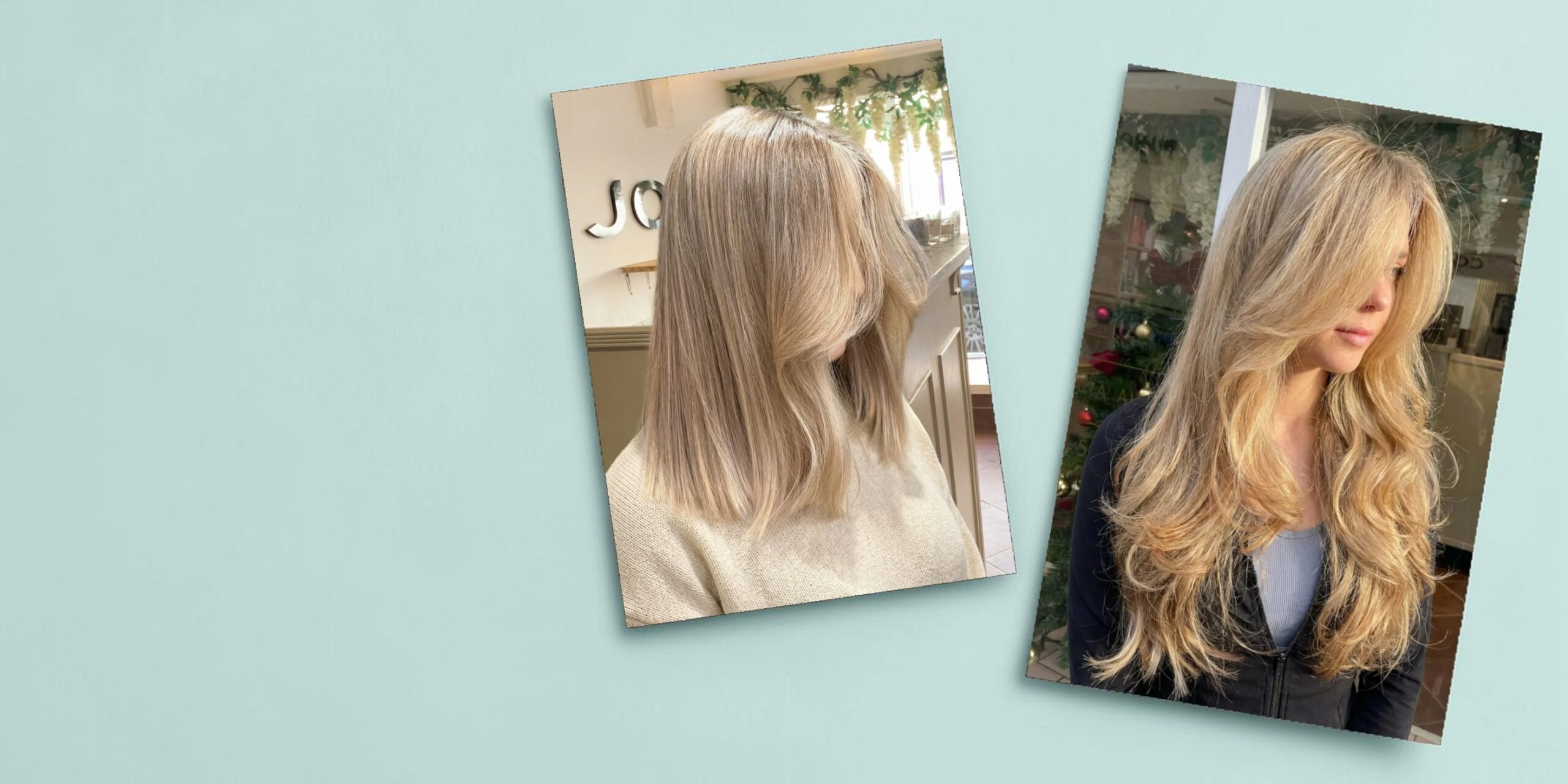
How to Transition from Highlights to Balayage
Thinking of moving from traditional highlights to a softer, lower-maintenance balayage? It’s a popular switch, and a very achievable one. The two are genuinely different though — highlights are applied in even sections for a more uniform, structured lift, while balayage is swept onto the mid-lengths and ends for a softer, more graduated, sun-kissed effect that grows out gently. Here’s how the transition actually works.
It depends on where your highlights are now
The right approach hinges on one thing: how grown-out your existing highlights are. That determines which of the two methods below your stylist will use — which is why a consultation matters before anything else, so your hair’s current state and your desired result can be properly assessed.
Method 1: when your highlights have grown out
If your highlights have grown out and there’s a good amount of natural regrowth at the roots, the transition is more straightforward. Your stylist can blend the existing lighter pieces into a balayage by placing new, softer colour through the mid-lengths and ends. The grown-out highlights integrate naturally into the balayage, and the regrowth you already have works with the look rather than against it.
Method 2: when your highlights are close to the roots
If your highlights still sit close to the root, it’s a different job. Here, a stylist will often apply a slightly darker colour through the root area to soften the contrast between the lightened sections and your natural base. That darker root gives the balayage its depth and creates the graduated effect — lighter through the ends, deeper at the top. New colour is then placed between the existing lighter pieces to build a blended, multi-tonal result.
Be patient — it may take more than one visit
An honest point: depending on your current colour and the look you’re after, the transition might not happen in a single appointment. Forcing it can compromise your hair’s condition, so a good stylist will take a measured approach. Realistic expectations matter here — our post on managing your colour expectations is worth a read.
Why people make the switch
The main draw is lower maintenance. Because balayage is concentrated away from the roots, it grows out far more softly than highlights — no harsh regrowth line — so you can go longer between appointments. It’s also versatile: subtle or bold, on most lengths and textures. If you’d like to understand the two techniques side by side first, our explainer on highlights versus balayage covers it well.
Looking after your new balayage
Balayage is fairly low-fuss to maintain. Sulphate-free shampoo and conditioner help keep the tone looking fresh, and the right aftercare keeps hair healthy between visits — our post on why hair colour fades explains how to get the most life out of your colour.
Switching from highlights to balayage is a refreshing change — a more natural, lived-in look with less upkeep. Take a look at our balayage service, or book a consultation and we’ll plan the right transition for your hair.